Things To Know Before Buying A Multi Color 3D Printer
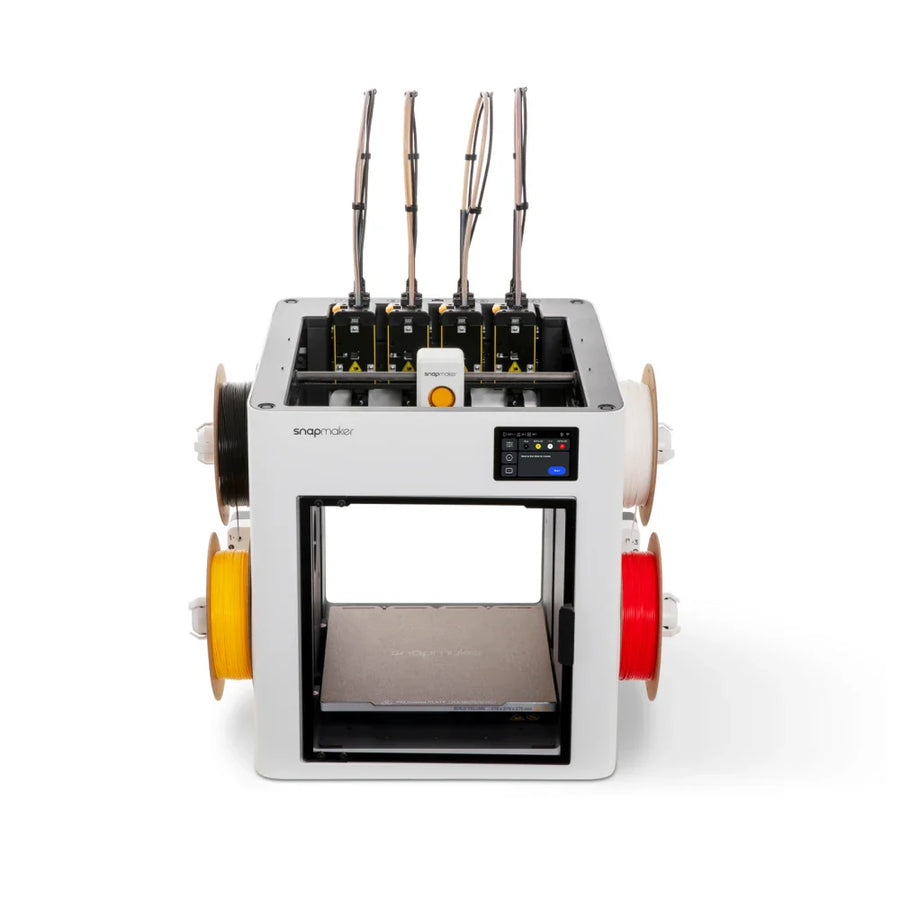
The true power of a multi color 3D printer extends well beyond the creation of colorful toys or aesthetic models. It marks a significant advancement in functional prototyping and end-use part production. By combining materials, a single print can have different physical properties in different zones. For instance, a robotics component can have rigid structural elements alongside flexible joints, all printed simultaneously. This is made possible by the "4 Toolheads Work As One" synergy, where the printer treats the four different filaments as components of a single, unified manufacturing strategy.
The Logic of Material Distribution
Designing for a multi-material system requires a shift in thinking. Instead of assembling parts after printing, you design the assembly into the printing process. Using a multi color 3D printer, you can assign a specific material to support structures (like BVOH or PVA) which dissolve in water, leaving a perfect finish on the final part. Meanwhile, the primary "Multi-Color & Multi-Material Printing" function allows for different infill densities or layer patterns in different sections of the model. The "270*270*270mm³ Build Volume" provides a large enough platform to explore these advanced manufacturing concepts on a meaningful scale, accommodating parts that are both wide and tall.
The Waste Reduction Advantage
One of the critical hesitations about multi-color printing has historically been the extreme waste generated by purging towers. However, the engineering of the "SnapSwap™ 4-Toolhead System with 5s Tool Change" offers a solution by drastically reducing the waste material. Because the toolheads are completely independent and dock away from the print area, the printer does not need to purge massive amounts of filament when changing from black to white. This ability to deliver "Smooth Printing with 5X More Speed and 5X Less Waste" makes the multi color 3D printer economically viable for high-resolution, multi color 3D printer multi-colored production runs, allowing artists to experiment without the fear of wasting expensive material.
Speed as an Enabler for Complexity
Complex models often have thousands of tool changes. If the "500 mm/s Max Speed, Up to 20,000 mm/s² Acceleration" were not part of the package, these changes would result in days of printing time. The high acceleration rate allows the toolhead to quickly move to the docking station, drop off one tool, pick up another, and zip back to the print. This is why a multi color 3D printer is able to handle intricate, highly detailed geometric models without taking an eternity. The speed is the enabler that makes complexity feasible, ensuring that you are not forced to choose between high-detail and reasonable wait times.
Automation and the User Experience
Despite the high-tech mechanics, the user experience is streamlined through intelligent design. "Auto Filament Loading" ensures that the machine is ready to go immediately, and with four toolheads, this feature becomes a necessity rather than a convenience. The printer automatically detects and feeds the filament, cutting it to the correct length and detecting jams. This automation invites users of all skill levels to engage with the multi color 3D printer. It removes the friction typically associated with multi-extrusion setups, allowing the user to focus solely on the design and material science aspects of their project, confident that the machine will handle the logistics.